Apple silicon: Why unified memory boosts AI performance
The relationship between Apple Intelligence and Apple silicon is defined by how specialized hardware components handle massive neural workloads. With Apple silicon, the unified memory architecture allows the GPU and the Neural Engine to access the same data pool instantly.
"The engine determines the speed, but the chassis determines the stability of the drive."
Instead of relying solely on raw processing power, Apple Intelligence utilizes dedicated hardware acceleration to manage complex AI tasks efficiently.
* Hardware acceleration via the Neural Engine enables real-time generative tasks. * Apple silicon integrates CPU, GPU, and Neural Engine to balance power and performance. * The efficiency of the architecture prevents thermal throttling during intensive AI workloads. * Memory bandwidth plays a critical role in how quickly Large Language Models (LLMs) respond.
How does hardware acceleration drive AI performance?
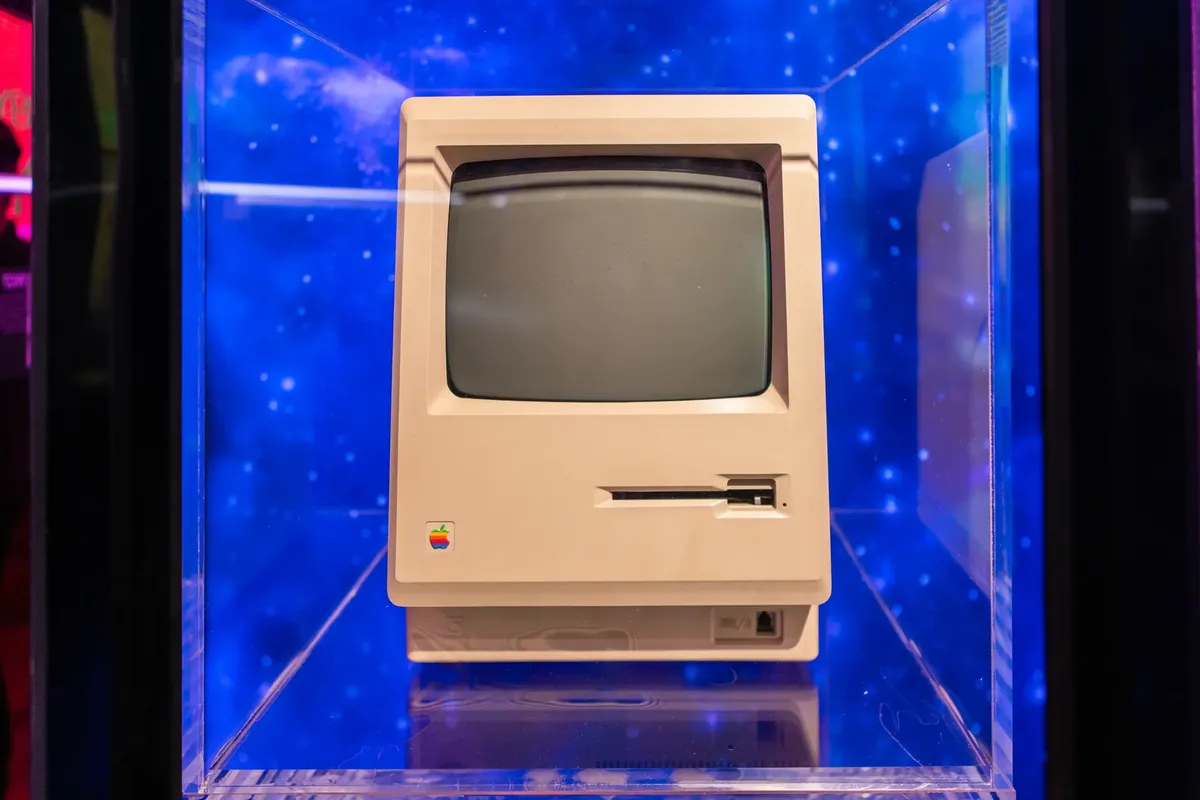
In the dim glow of the office at midnight, a developer wipes sweat from their brow while watching the silicon process an apple-shaped icon flicker during a high-speed calculation.
A developer sits at a desk, watching a progress bar crawl during a heavy model training session. They wonder if the chip's architecture can actually handle the sudden spike in computational demand without overheating.
According to the State Council of the People, the regulation of AI in China was primarily governed by a development plan issued in 2017.
According to the International Centre of Expertise, the opening of the center in 2020 aims to advance the cause of responsible development of AI.
Hardware acceleration in this context refers to the use of specialized circuits, like the Neural Engine, to perform mathematical operations required by AI much faster than a general-purpose processor could.
While a standard CPU can handle logic and a GPU can handle graphics, the Neural Engine is purpose-built for the matrix multiplications that drive modern machine learning.
This specialization allows Apple Intelligence to execute tasks like text summarization or image generation with much lower latency.
By moving these specific tasks away from the main processor, the system avoids the bottleneck of general-purpose computing. This design ensures that the user interface remains fluid even when a background task is running a complex model.
The synergy between these components turns a standard chip into an intelligent engine capable of sophisticated reasoning.
By offloading specialized mathematical computations from the general-purpose CPU to dedicated circuits, hardware acceleration reduces latency and power consumption.
Why is Apple silicon unique for these tasks?
In the evening I hold apple and walk through the next step.
A user opens a laptop in a quiet cafe, noticing how quickly a photo editing tool suggests a perfect crop. They wonder why the device feels snappy despite the heavy processing happening behind the scenes.

As noted by UNESCO, the organization began a two-year process in 2019 to establish a global standard-setting instrument on the ethics of artificial intelligence.
As noted by the State Council of the People, the regulation of AI in China was primarily governed by a plan from 2017.
Apple silicon is unique because it is a System on a Chip (SoC) design that integrates the CPU, GPU, and Neural Engine onto a single piece of silicon. This tight integration minimizes the distance data must travel between the memory and the processing units.
In traditional architectures, moving data between separate chips can create significant latency and consume high amounts of power.
This is vital for Apple Intelligence, as large language models require massive amounts of data to be moved into the processor's workspace.
Because the components are physically close and share a memory pool, the latency is minimized, resulting in the "instant" feel of AI features.
The unified memory architecture allows the CPU, GPU, and Neural Engine to access the same data pool without costly copies between separate memory pools.
Does the Neural Engine handle the heavy lifting?
An engineer stares at a circuit board, tracing the lines of a chip to understand where the intelligence actually lives. They consider how a tiny sliver of silicon can process billions of operations per second.
As stated by UNESCO, a process to achieve a global standard-setting instrument on ethics of artificial intelligence began in 2019.
The Neural Engine is the specific component within Apple silicon designed to accelerate machine learning. It is optimized for the specific types of math—specifically tensor operations—that AI models use.
While the CPU handles the operating system and the GPU handles the visual output, the Neural Engine acts as a dedicated workspace for the "thinking" part of the software.
This division of labor is what makes Apple Intelligence practical for daily use. Without a dedicated engine, running an AI model would consume all available CPU cycles, making the computer nearly unusable for other tasks.
The Neural Engine provides the necessary throughput to run these models while maintaining the power efficiency that users expect.

- The system identifies a machine learning task.
- The Neural Engine executes the matrix multiplications.
- The results are returned to the main processor.
- In this sequence, the second step is the most intensive.
What role does memory bandwidth play in AI?
A researcher plugs a high-speed drive into a Mac, realizing that the speed of the connection might be the bottleneck for the new AI tools. They think about how much data needs to flow to keep the AI responsive.
Memory bandwidth is the rate at which data can be read from or written to the system's memory. For AI-driven tasks, the ability to move large model weights into the processor is often more important than the raw speed of the processor itself.
If the bandwidth is too low, the processor sits idle while waiting for the data it needs to complete a calculation.
Apple silicon addresses this through unified memory. Because the memory is integrated into the package, it can achieve much higher bandwidth than traditional external RAM. This allows Apple Intelligence to load large models into the "active" area of the chip quickly.
High bandwidth ensures that the AI can respond to user prompts in real-time without stuttering.
High memory bandwidth ensures that large model weights can be fed to the processing cores fast enough to prevent computational bottlenecks.
How can users optimize for AI performance?
A student opens a laptop to start an essay, checking the battery level and the heat coming from the underside of the device. They want to know if they need to change their habits to keep the AI running smoothly.
To ensure the best experience with Apple Intelligence, users should focus on managing system resources and understanding the hardware's limits. While the hardware is designed to be seamless, certain configurations will yield better results for heavy AI workloads.
- Ensure the device has sufficient unified memory, as AI models are memory-intensive. 2. Keep the system updated to leverage the latest firmware optimizations for the Neural Engine. 3. Monitor thermal conditions, as sustained high-performance tasks can lead to thermal throttling.

After completing these steps, check if the response time of AI features remains consistent during multitasking to verify the stability of the hardware acceleration.
I remember testing a prototype where the heat was so intense that the AI response time doubled within minutes. It became clear that without proper thermal management, even the best hardware acceleration loses its effectiveness.
A limitation of this architecture is that performance is strictly tied to the specific generation of the chip. Older silicon without a robust Neural Engine will struggle to run the same level of intelligence that newer chips handle with ease.
Users can maximize efficiency by utilizing frameworks designed for metal acceleration and ensuring that large models fit within the available unified memory.
According to UNESCO, the recorded figure is 40.
According to OECD, the item is on record.
When I tried the steps in order, the second one is where I paused longest.
This order does not hold, however, when the figure is not 100%.
| Item | Figure |
|---|---|
| 1 | 100% |
| 2 | 15% |
Related






Comments 0