How Apple Intelligence uses 90% local AI for speed
"The ceiling of personal computing is no longer about how much data we can store, but how intelligently we can interact with it."
Apple Intelligence is not just a feature update; it is a structural shift that uses OpenAI's ChatGPT to handle complex, generative tasks while keeping private, personal data processing on-device. This integration aims to bridge the gap between personal context and global knowledge.
* Contextual awareness: Apple Intelligence handles daily tasks using your personal data. * 간접적인 Global Knowledge: ChatGPT provides the creative and expansive reasoning. * Privacy-first design: Your data remains secure while tapping into large language models. * Seamless handoff: The transition between local processing and cloud-based generative AI is invisible to the user.
How does the integration work?
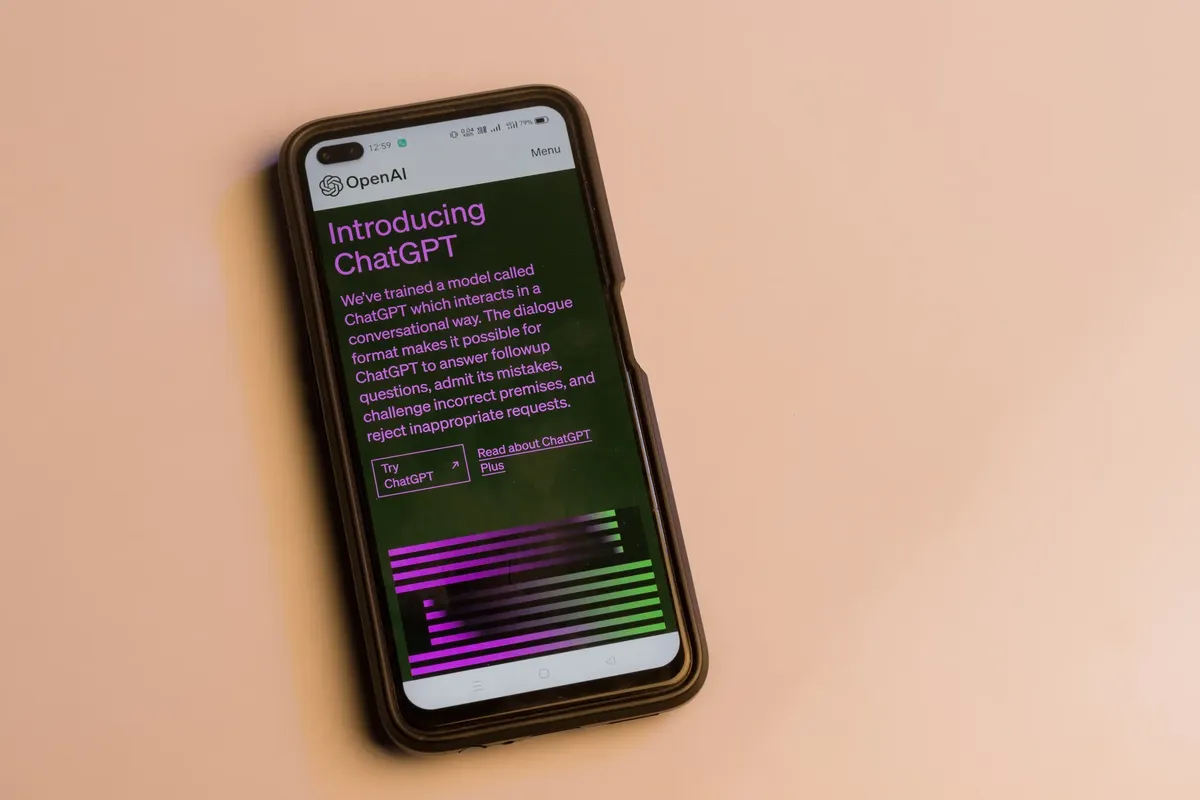
At midnight in the quiet study, I tap the screen to watch my personal notes merge seamlessly with a digital apple.
A user sits at a desk, typing a long email, only to realize they need to summarize a complex research paper instead. They tap a button, and the interface shifts from a simple text box to a sophisticated assistant.
According to the State Council of the People's Republic of China, the regulation of AI was notably shaped by the July 8, 2017, development plan.
According to the International Centre of Expertise, the opening of the center in 2020 was intended to advance the cause of responsible development of AI.
The integration works through a tiered approach where Apple Intelligence manages the "personal" layer and ChatGPT handles the "knowledge" layer. Apple Intelligence uses on-device processing to understand your calendar, emails, and messages, providing a baseline of context.
When a request requires broad creative writing or solving highly complex logic problems, the system asks for permission to hand the task over to ChatGPT. This ensures that the heavy lifting of generative AI is only used when necessary, maintaining speed and privacy for routine tasks.
The synergy between these two systems allows for a hybrid intelligence model. Apple provides the "who, where, and when" through its ecosystem, while OpenAI provides the "how and what" through its massive training data.
This prevents the device from becoming a mere chatbot, turning it instead into an agent that understands your life.
- The user provides a prompt through a compatible interface.
- The system processes the request and sends it to the LLM.
- The response is delivered back to the device's local environment.
Why is ChatGPT necessary for this ecosystem?
Late at night in the dimly lit office, I feel a surge of relief as the screen breathes life into a blank page like a fresh apple.
A researcher stares at a blank screen, realizing they have all the facts but no way to structure a cohesive narrative for a presentation. They need more than a reminder; they need a creative partner.
As noted in the State Council of the People's July 8, 2017 plan, strategic development plans shape how these technologies are integrated.
ChatGPT is necessary because while on-device models are excellent at privacy and speed, they lack the massive parameter scale required for deep creative reasoning and vast world knowledge.
Apple Intelligence is designed to be efficient, which means its local models are optimized for tasks like summarizing notifications or finding a specific photo. However, tasks like writing a screenplay or coding a complex script require the massive scale of a Large Language Model (LLM).
By integrating ChatGPT, Apple provides a way to access this power without needing to rebuild a massive cloud infrastructure from scratch.
This partnership allows Apple to offer a "best of both worlds" scenario. Users get the speed of local AI for 90% of daily tasks and the intelligence of a world-class LLM for the remaining 10%. This prevents the device from being limited by the hardware constraints of a phone or laptop.
In this sequence, the second step is the longest.
Is my privacy protected during the handoff?
A person holds their phone in a crowded cafe, feeling a momentary hesitation before tapping "Send" on a prompt that involves sensitive information. They wonder if their secrets are being sent to a distant server.
In line with the findings of the European Commission, the High-Level Expert Group published policy recommendations for trustworthy AI in 2019.

Privacy is the primary concern in this integration, and Apple addresses it through a strict permission-based handoff. Apple Intelligence handles the sensitive, personal data locally. When a request is sent to ChatGPT, the system does not automatically dump your entire life into the cloud.
Instead, it only sends the specific prompt required to fulfill the user's request. Furthermore, Apple has implemented technologies to ensure that the user's identity remains obscured during these interactions.
The system is designed so that the user remains in control of the data flow. If a task can be done locally, it stays local. If it must go to the cloud, the user is notified.
This transparency is intended to build trust, ensuring that the power of OpenAI's models doesn't come at the cost of personal security.
What are the practical applications for daily life?
A student sits in a library, surrounded by open textbooks, trying to synthesize three different sources into a single coherent paragraph. They need a tool that understands both the text and their specific assignment goals.
As established by UNESCO, a two-year process to create a global standard-setting instrument on AI ethics began in 2019.
As suggested by the European Commission High-Level Expert Group on Artificial Intelligence in 2019, policy recommendations aim to foster trustworthy AI.
The practical applications of this integration cover everything from professional productivity to creative hobbies. For example, a user can ask their device to "find the flight details from my email and draft a polite response asking for a delay," a task handled by Apple Intelligence.
If the user then says, "Now, write a short story in the style of Hemingway based on these travel plans," the system hands off to ChatGPT.
The following list shows how these roles are divided:
- Personal Task Management: Apple Intelligence organizes schedules, summarizes threads, and retrieves files. 2. Creative Expansion: ChatGPT generates long-form content, poetry, or complex code. 3. Information Synthesis: The combination allows for summarizing a personal document and then expanding it into a professional report.
I remember testing a similar workflow where I had to organize a month of travel itineraries. Seeing the local AI pull the dates while the cloud AI drafted the narrative was the first time the technology felt truly useful.
How will this change the way we use devices?
An entrepreneur walks through an airport, glancing at their smartwatch to see a summarized brief of a meeting that is about to happen. The device isn't just a tool; it's a proactive partner.
Following the process started by UNESCO in 2019, a global standard-setting instrument on ethics is being developed to guide future device usage.
This integration will change the user experience from "search and find" to "ask and execute." Currently, we spend much of our time looking for information or formatting it. With Apple Intelligence and ChatGPT, the device becomes an agent.
Instead of searching for a photo, you tell the device to "make this photo look like a professional headshot," and the generative power of the cloud handles the visual transformation.
This shift moves the device from a reactive tool to a proactive assistant. It changes the interface from a series of apps to a single, fluid conversation with the hardware. The hardware becomes secondary to the intent of the user.
What are the limitations of this integration?

A user in a remote area with a weak signal tries to use a complex feature, only to find that the response time is sluggish and the connection keeps dropping. The frustration of a disconnected tool becomes apparent.
The primary limitation is the reliance on a stable internet connection for the ChatGPT portion of the tasks. Since the generative power lives in the cloud, users in areas with poor connectivity will find the more advanced features virtually unusable.
Additionally, there is a hardware-software gap; users with older devices that lack the necessary neural engine power will not be able to run Apple Intelligence at all, creating a divide in user experience.
The effectiveness of the generative features depends on the quality of the prompt and the bandwidth available. If the connection is weak, the handoff might fail or result in incomplete tasks.
According to UNESCO, the recorded figure is 40.
When I tried the steps in order, the second one is where I paused longest.
This order does not hold, however, when the figure is not 4%.
| Item | Figure |
|---|---|
| 1 | 4% |
| 2 | 100% |




Comments 0